How often will someone come to restock the vending machine?

TL;DR: Vending machine restocking depends on usage, not a fixed schedule. A good vending operator will build the restocking schedule around the property’s needs, monitor what sells, use request forms when available, and adjust service if the machine is running empty too often.
How often will someone come to restock the vending machine?
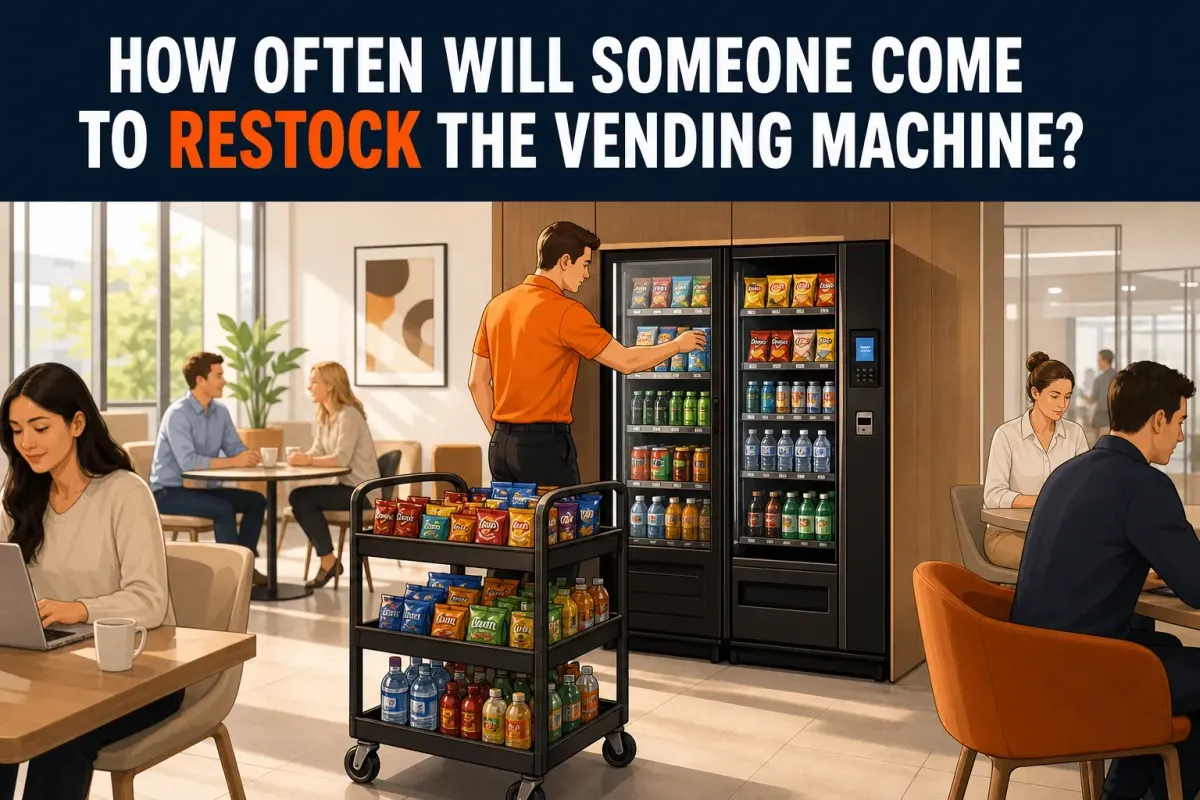
One of the most common questions property managers and facility teams ask is, “How often will someone come to restock the vending machine?”
The best answer is: it depends on usage.
A vending machine in a busy workplace, apartment building, gym, school, warehouse, or customer-facing property may need to be restocked more often than a smaller office or lower-traffic building. The operator should not use the same schedule for every location. They should build the restocking schedule around the location’s actual needs.
If you are comparing vending options for a property in Texas, the restocking process should be part of the conversation before the machine is installed. A good operator should explain how they monitor usage, adjust service frequency, and keep popular products available. You can learn more about free vending machine service in Texas and how Vending Village connects properties with vetted local operators.
At the start, the operator may begin with an expected service schedule, then adjust based on:
- How quickly products sell
- Which items run out first
- How many people use the machine
- Whether the machine has snacks, drinks, fresh food, or a smart cooler setup
- Whether the machine has remote inventory tracking
- How often staff, tenants, residents, or customers submit requests
The goal is not just to visit the building on a calendar. The goal is to keep the machine useful.
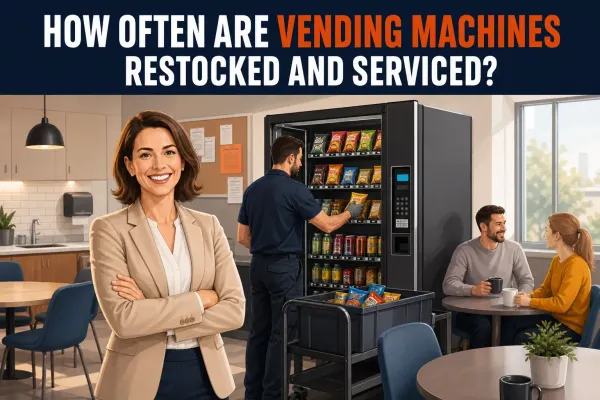
Restocking should not be based on guesswork alone. Modern vending machines can provide reporting that shows when products are getting low or when a machine needs attention, so service can be scheduled based on actual usage. For a broader breakdown, read our guide on how often vending machines are restocked and serviced.
What happens after the machine is first installed?
The first few weeks are important.
When a vending machine is first placed, the operator is usually learning the location. They need to see what people actually buy, how quickly the machine gets used, and whether the first product mix makes sense.
A good operator will watch the machine closely at the beginning and make adjustments. Sometimes the first setup is close to correct. Other times, the location may need more drinks, fewer snacks, different product sizes, healthier options, or a different restocking rhythm.
This is also where a request form can help.
Some operators provide a form where staff, tenants, residents, or customers can submit product requests or service notes. That gives the operator better feedback without making the property manager handle every small vending question.
Who handles product requests?
Product requests should usually go directly to the vending operator.
If someone wants a different drink, a specific snack, more healthy options, or a product removed, the cleanest process is to use the operator’s request form if one is available. That keeps the feedback organized and helps the operator see what people are asking for.
The property manager does not need to manage every product request.
In many cases, the operator can handle requests directly and may update the property manager when product swaps are being made. That keeps the process simple:
- Users submit requests through the operator’s form
- The operator reviews what is being requested
- Popular or reasonable requests may be tested
- Slow-moving products can be swapped out
- The property manager is updated when needed
This is better than guessing. The people using the machine every day usually know what they want, and the operator can compare those requests against actual sales.
What if the vending machine is running empty too often?
If the machine is running empty too often, the property manager should contact the vending operator directly.
Restocking is only one part of ongoing vending service. The operator is also responsible for basic maintenance, product adjustments, service visits, and responding when something is not working properly. If you want a broader breakdown of responsibilities after installation, read who maintains a vending machine at your property.
That usually means the restocking schedule needs to be adjusted. The operator may need to visit more often, increase quantities of best-selling products, remove slow-moving items, or change the mix.
If demand is strong enough, the operator may also add a second machine if there is space.
That can make sense when one machine is not enough to keep up with the building. For example, a busy workplace may need separate snack and drink machines. A property with strong demand for fresh food or smart cooler products may need another machine to support the volume.
The important thing is communication. If people are regularly seeing empty rows or sold-out products, the operator needs to know.
Vending Village is also here to help when needed, but the first step should usually be contacting the operator directly. They are the person responsible for stocking, servicing, and adjusting the machine.
What a good restocking process looks like
A good vending operator does more than refill empty slots.
The best process is responsive and based on real usage. The operator should pay attention to what is selling, what is not selling, and what people are asking for.
A strong restocking process includes:
- Monitoring usage after installation
- Keeping popular items in stock
- Replacing slow-moving products
- Responding to product requests when reasonable
- Increasing service frequency if the machine runs empty
- Communicating clearly with the property manager
- Considering a second machine if demand is high enough
For property managers, the main thing to understand is that restocking should be flexible.
A vending machine is not a one-time setup where everything stays the same forever. The operator should learn the location, adjust the service schedule, and keep improving the product mix over time.