What's Included in Vending Machine Maintenance Services?

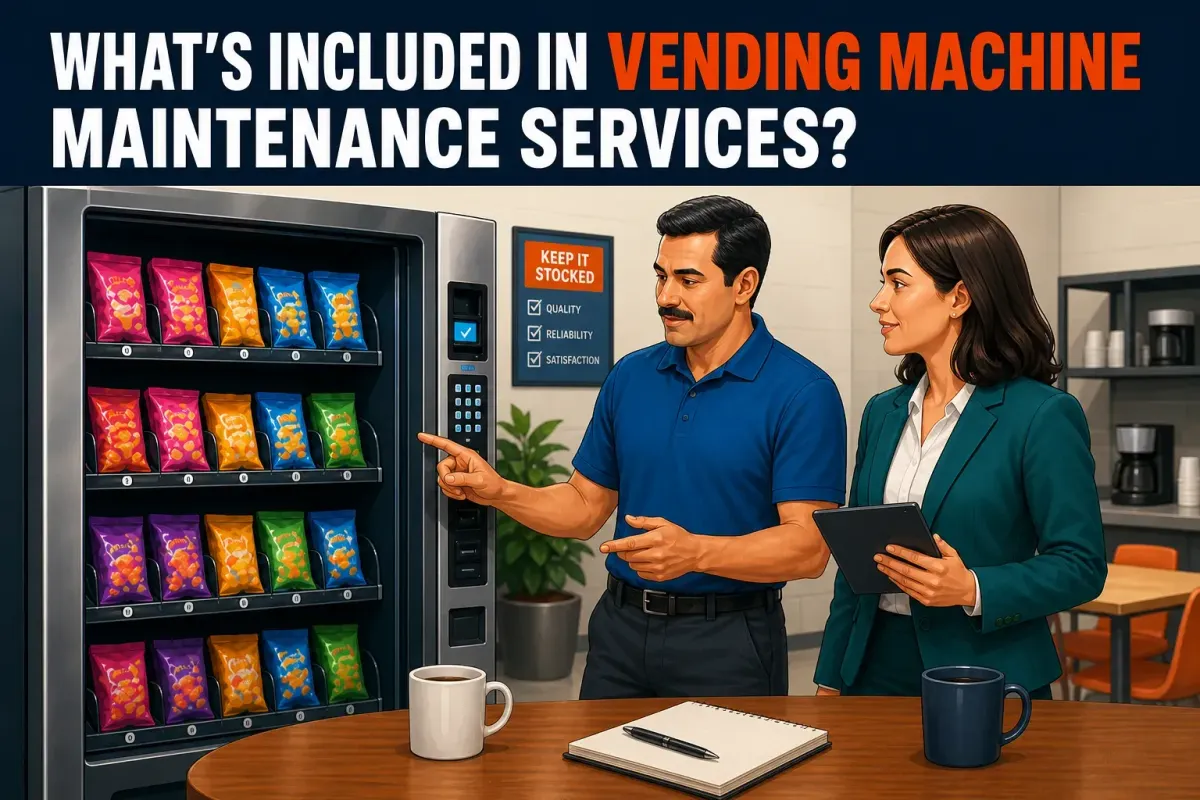
TL;DR: Vending machine maintenance services usually include restocking, cleaning, repairs, payment issue support, product changes, expired product checks, refunds, machine moves, and service calls. For property managers and facility leads, the main thing to understand is that maintenance is usually handled by the vending operator, not the property.
What’s included in vending machine maintenance services?
For most properties, vending machine maintenance services are part of the operator’s responsibility. If you manage a building in California and want install, stocking, and maintenance handled for you, Vending Village also offers free vending machine service in California through vetted local operators.
That means the property manager should not be expected to refill the machine, clean the inside, fix payment issues, call a repair company, manage product complaints, or handle expired items.
In a standard vending placement, the operator installs the machine, stocks it, services it, and keeps it working. The property provides the space, access, and basic communication when something needs attention. That is the basic model behind a free vending service: a vetted local operator installs, stocks, and services the machine at no cost to the property.
If you are still planning the setup, it also helps to understand how long it takes to get a vending machine installed before discussing the ongoing maintenance plan.
From what we see at Vending Village, the biggest question property managers usually have is not whether maintenance is included. It is how often the machine will actually be serviced.
That answer depends on usage, machine alerts, restocking needs, and the operator’s service plan.
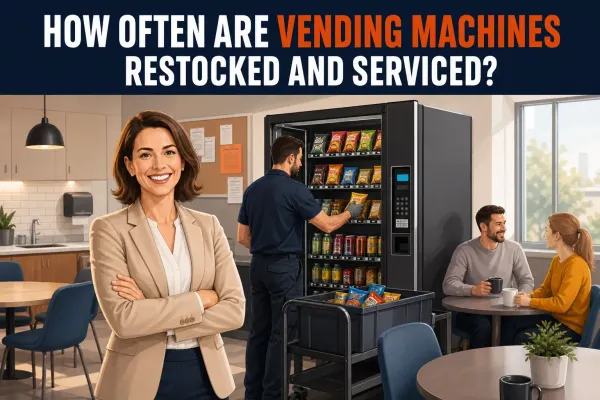
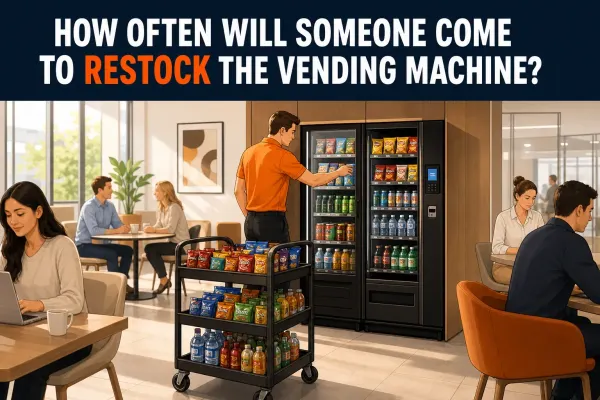
Maintenance and restocking often happen together during a normal service visit. The operator may restock products, clean the machine area, check payment systems, remove expired or slow-moving items, fix small issues, and review the product mix. We explain how this works from the property manager’s point of view in our guide on how often vending machines are restocked and serviced.
What vending machine maintenance usually includes
A good vending machine maintenance service should cover the normal work required to keep the machine stocked, clean, and usable.
That typically includes:
- Restocking products
- Cleaning the machine
- Checking for expired products
- Handling repairs
- Fixing payment issues
- Processing refunds when needed
- Changing products based on demand
- Responding to service calls
- Moving or adjusting the machine if needed
- Monitoring the machine for alerts
The exact service may vary by operator and machine type, but the main idea is simple: the operator should be responsible for keeping the vending machine operating properly.
For property managers, this matters because vending is supposed to be a simple amenity. If the property has to manage the machine every week, the setup is not working the way it should.
For breakrooms, this matters because adding vending should not turn into another task for the office team. If the operator handles stocking, maintenance, repairs, product changes, and service calls, the property can focus on making the space cleaner, clearer, and easier to use. For that approach, read How to Build a Better Breakroom on a Zero-Dollar Budget.
Restocking and product changes
Restocking is usually the most visible part of vending machine maintenance.
If the machine is being used often, the operator needs to restock it before popular items run out. If certain products are not selling, the operator may replace them with better options.
This can include:
- Swapping slow-moving snacks
- Adding more drinks if drinks sell faster
- Removing products that expire too often
- Adjusting healthy snacks, energy drinks, or meal replacement items based on demand
- Testing different product mixes for the location
Product selection should not be random. An office, warehouse, gym, school, apartment building, or medical facility may all need different items.
In my opinion, product changes are one of the most overlooked parts of maintenance. A machine can be technically working, but if the products are wrong, tenants or employees stop using it. Good maintenance is not just fixing the machine. It is keeping the machine useful.
Repairs, cleaning, refunds, and payment issues
Maintenance also includes the less visible work that keeps the machine reliable.
That includes cleaning the machine, checking product dates, fixing jams, handling card reader problems, and responding when a customer says they were charged incorrectly or did not receive a product.
Property managers should know who to contact when something goes wrong. The process should be simple. If an employee or tenant reports an issue, the property should be able to pass it to the operator without becoming the repair desk.
Common maintenance issues include:
- Product stuck in the machine
- Card reader not working
- Machine not accepting payment
- Machine not cooling properly
- Product expired or damaged
- Machine needs cleaning
- Customer refund request
- Machine needs to be moved or repositioned
In a standard vending setup, those issues should go to the operator.
The property manager’s role is usually limited to providing access, reporting issues when needed, and communicating any location-specific concerns.
How often should a vending machine be serviced?
This is the question property managers ask most often.
The answer is that service should be based on actual machine activity, not just a random schedule.
A busy machine may need more frequent restocking. A slower machine may not need weekly visits. A drink machine in a warehouse may turn faster than a snack machine in a small office. A machine with remote monitoring may also send alerts when products are low or when there is a technical issue.
A good operator should look at:
- Machine alerts
- Product levels
- Sales volume
- Customer complaints
- Expired product risk
- Location type
- Access hours
- Route schedule
- Seasonal or workplace changes
For example, a property manager may ask, “How often will the machine be serviced?”
A practical answer would be:
The operator monitors the machine, responds to alerts, and adjusts restocking or maintenance based on usage.
That is usually a better answer than promising a fixed schedule that may not fit the location.
If the machine is busy, the operator should service it more often. If the machine is slower, the operator may service it less often but still needs to keep it clean, stocked, and working.
What property managers should confirm before installation
Before approving a vending machine, property managers should ask a few basic maintenance questions.
Who is responsible for service?
Confirm that the operator handles restocking, repairs, cleaning, payment issues, refunds, expired product checks, and product changes.
This should not be unclear.
How are issues reported?
Ask who the property should contact if the machine is empty, broken, dirty, or having payment problems.
There should be a simple contact process.
How often will the machine be checked?
The operator may not give a fixed answer, but they should explain how they monitor the machine and decide when to restock or service it.
Are product changes included?
If tenants or employees are asking for different drinks or snacks, the operator should be able to review sales and adjust the product mix when it makes sense.
What happens if the machine is not being used?
Not every location performs well. If the machine does not get enough usage, the operator may need to change products, adjust the service schedule, move the machine, or decide whether the location is still a good fit.
Final answer: vending machine maintenance should be handled by the operator
So, what’s included in vending machine maintenance services?
In most standard placements, maintenance includes restocking, cleaning, repairs, payment issue support, product changes, expired product checks, refunds, machine moves, and service calls.
For property managers and facility leads, the main point is that the operator should be handling the ongoing work. The property should not need to manage the machine, restock products, repair equipment, or deal with payment issues directly.
The most important question is how the operator will monitor and service the machine. A good vending setup should be based on timely restocking, machine alerts, and actual usage at the property.