Employee satisfaction and workplace perks through vending

TL;DR: Vending can be a simple workplace perk that gives employees easier access to snacks, drinks, coffee, healthier options, and after-hours choices. It should not be treated as a replacement for larger employee benefits, but it can improve day-to-day convenience without adding much work for the property manager or facility lead.
Employee satisfaction and workplace perks through vending
When property managers and facility leads think about employee satisfaction, vending is usually not the first thing that comes to mind.
That is fair.
A vending machine is not a full benefits program. It is not a replacement for pay, flexibility, culture, or major employee perks.
But it can solve a real day-to-day problem.
Employees need quick access to snacks, drinks, coffee, and basic food options during the workday. If the building does not have convenient options nearby, people leave the property, take longer breaks, or have fewer choices during busy shifts.
A well-placed vending machine can make the workday a little easier. The same idea applies in tenant-facing buildings too, where better onsite convenience can support the overall property experience and improves tenant satisfaction.
That is the right way to think about it. Not as a major benefit by itself, but as a practical workplace convenience that supports employees during the day.
Vending only works as a workplace perk when the service is reliable. If machines are empty too often, payment issues are not handled, or the operator is hard to reach, the amenity can become another complaint for employees. If that is happening, read How Do I Switch Vending Operators Without Disrupting My Building? before removing the current machine.
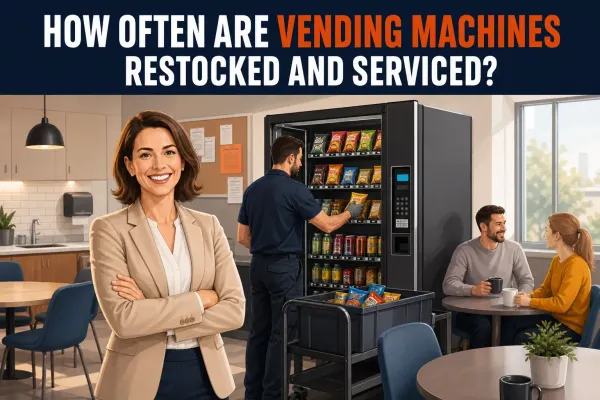
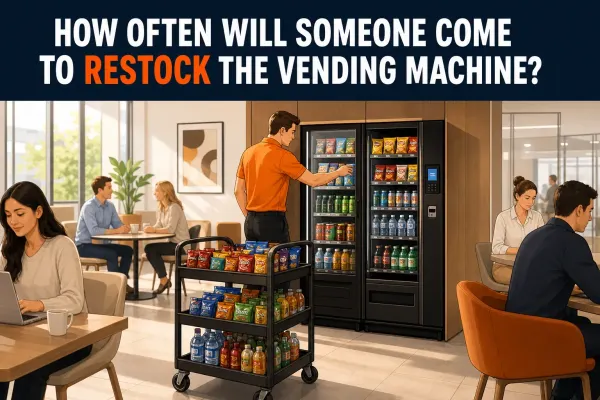
A big part of reliability is restocking. Employees will only view vending as a useful workplace perk if the machine is stocked consistently and adjusted based on what people actually buy. Restocking is not always a fixed schedule; a good operator should build the service routine around usage, product demand, and feedback from the location. For more detail, read How Often Will Someone Come to Restock the Vending Machine?
Why vending works as a workplace perk
The value of vending is usually simple: it saves employees time and gives them more convenient options.
This matters most when employees would otherwise need to leave the building for a snack, drink, coffee, or quick food option.
Common workplace issues include:
- Employees leaving the building for snacks or drinks
- Long break times because food options are not close
- Limited stores, cafes, or restaurants nearby
- Shift workers needing after-hours options
- Employees wanting more convenience during the day
- Staff needing quick access between meetings, shifts, or busy periods
In those situations, vending can help.
It gives employees an on-site option without requiring the employer or property manager to run a store, manage inventory, or handle payments. That is the basic model behind a free vending service: a vetted local operator installs, stocks, and services the machine at no cost to the property.
From what we see at Vending Village, that simplicity is the main reason property managers like vending. It adds convenience without creating a large new responsibility. If you manage a workplace or property in Florida, Vending Village also offers free vending machine service in Florida through vetted local operators who can install, stock, and service the machine.
The best vending setup depends on the workplace
There is no single vending setup that works for every property.
An office may need snacks, drinks, coffee, and healthier options. A warehouse may need more cold drinks, energy drinks, and filling snacks. A medical building may need quick items for staff who have limited break windows. A building with shift workers may need options available outside normal business hours.
Good vending setups can include:
- Snacks
- Drinks
- Coffee options
- Healthy snacks
- Energy drinks
- Cold food
- Basic meal replacement items
- Seasonal products
- Staff-focused products
- Tenant-focused products
The key is not to guess forever. The operator should watch what employees actually buy and adjust the machine over time.
In my opinion, this is where vending gets more useful. A machine should not be stocked once and then ignored. The product mix should improve as the operator learns the workplace.
The products inside the machine matter just as much as having the machine itself. Property managers can give input on product preferences, but the best mix should be guided by what employees, tenants, or visitors actually use. We explain how that process works in our guide on whether property managers can choose what products go in the vending machines.
Product variety matters
One thing employees appreciate is variety.
If the machine has the exact same products every week, people may stop noticing it. If the operator changes products based on demand, season, and feedback, the machine feels more useful.
That does not mean changing everything constantly.
It means keeping the core best-sellers, then rotating some items when it makes sense.
For example:
- More cold drinks during warmer months
- More coffee or warm beverage options in colder months
- Healthier snacks if employees are buying them
- More filling items if the workplace has long shifts
- More quick grab-and-go options for busy staff
- Fewer products that do not sell
- New items tested in small quantities
A larger variety from one day to the next can help, but it still needs to be practical for the operator.
The best product mix is usually a balance between consistency and rotation. Keep what sells, remove what does not, and adjust as employee habits change.
Vending is useful when it is easy to access
Placement matters as much as the products.
A vending machine in the wrong place will usually underperform, even if the product mix is good.
For employee satisfaction, the machine should be placed where employees naturally go during the day.
Good areas may include:
- Break rooms
- Staff lounges
- Common areas
- Near time clocks
- Near lunchrooms
- Near high-traffic employee entrances
- Shared amenity spaces
- Warehouse break areas
- Office kitchen areas
The machine should be visible, easy to reach, and not placed somewhere employees feel awkward using it.
It also needs power, access for servicing, and enough room for delivery and restocking.
A good operator should help the property manager think through placement before installation. The goal is not just to place a machine. The goal is to place it where employees will actually use it.
What property managers should expect
For most standard vending placements, the property manager should not have to manage the machine.
The operator should usually handle:
- Installation
- Stocking
- Product selection
- Product changes
- Maintenance
- Repairs
- Payment issues
- Refunds
- Expired product checks
- Service calls
- Restocking schedule
The property manager’s role is usually to provide space, access, and basic communication when needed.
This is important because a workplace perk stops feeling useful if it creates more work for the facility team.
In a good setup, the property gets a convenient amenity and the operator handles the service.
When subsidized vending may make sense
Most vending setups work with employees paying at the machine.
But some companies want to offer lower pricing or free items as an employee perk. In that case, the business may subsidize the cost.
For example, a company might want:
- Free drinks for employees
- Discounted snacks
- Lower pricing than standard vending
- A monthly employee snack budget
- Specific products available regardless of sales volume
That can work, but it should be discussed upfront.
If the business wants prices as low as possible, the operator may need to bill the company at the end of the month to cover the difference.
That is not a bad setup. It just needs to be clear.
Final answer: vending can support employee satisfaction when it solves a real convenience problem
Vending is not the biggest employee benefit a workplace can offer, but it can be a practical workplace perk.
It works best when employees need quick access to snacks, drinks, coffee, healthier options, or after-hours food choices. It is especially useful when employees would otherwise leave the building, take longer breaks, or have limited options nearby.
The best setups are simple: place the machine where employees already go, stock it based on what people actually buy, rotate products when it makes sense, and let the operator handle the service.
For property managers and facility leads, that is the main benefit. Vending can add convenience to the workplace without requiring the property to manage inventory, repairs, refunds, or maintenance.