how much does it cost to rent a vending machine?

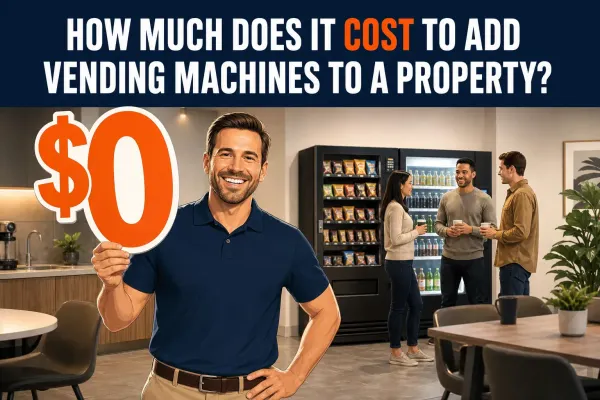
TL;DR: In most cases, it costs the location $0 to rent a vending machine. The vending operator usually covers the machine, delivery, installation, stocking, service, repairs, payment processing, and product selection, then earns money when people use the machine.
How much does it cost to rent a vending machine?
For most offices, warehouses, gyms, apartment buildings, schools, and other commercial properties, the answer is simple: it usually does not cost the location anything to get a free vending machine installed.
That is one of the biggest misunderstandings we see at Vending Village.
A lot of property managers assume they need to:
- Pay a monthly vending machine rental fee
- Buy the machine themselves
- Guarantee sales
- Manage the inventory
- Handle repairs or service calls
- Be responsible if the machine does not perform well
In a standard vending placement, that is usually not how it works.
The vending operator owns or supplies the machine, installs it, stocks it, services it, handles repairs, manages payments, and earns money when people buy snacks, drinks, or other vending machine products.
The location provides the space, access, and a working relationship.
In some cases, the location may also earn a commission from sales, depending on the size of the location, the expected volume, and the agreement with the operator.
This is also why vending can work as a practical breakroom upgrade. If the property does not need to buy the machine, stock it, or manage service, the office can improve access to snacks and drinks without creating a new internal job. For a practical breakdown, read How to Build a Better Breakroom on a Zero-Dollar Budget.
For many properties, the better question is not whether to rent or buy a vending machine, but whether the property should have to pay for one at all. In most cases, vending should be installed at no upfront cost to the property, with the provider handling installation, stocking, maintenance, repairs, and service. We explain this in more detail in our guide on how much it costs to add vending machines to a property.
What is usually included when the vending machine is free?
When a vending machine is placed at no cost to the location, the operator is usually covering the main costs of the service.
That typically includes:
- Machine cost
- Delivery
- Installation
- Stocking
- Product selection
- Ongoing service
- Repairs
- Payment processing
- Restocking visits
- Basic machine support
This is why operators care so much about location quality.
A vending machine is not free for the operator. The operator is making an investment in equipment, product, labor, fuel, payment processing, and time. They are willing to cover those costs because the machine can generate sales over time if the location has enough usage.
That is also why not every location will qualify.
A small office with very few employees may still want vending, but an operator has to decide whether it makes sense to place a machine there. The machine needs enough regular users to justify the cost of installation, stocking, and service.
When would a location pay for vending?
There are situations where a vending machine may not be completely free for the location.
The most common example is when the property manager or business owner wants the pricing inside the machine to be very low, or wants certain products to be free for employees.
In that case, the location may subsidize the cost.
For example, a company may want drinks, snacks, or healthy snacks for vending machines offered at lower-than-normal prices as an employee perk. The operator can still provide the machine and service, but the business may be billed at the end of the month to cover part or all of the product cost.
This usually happens in situations like:
- Offices that want free snacks for employees
- Workplaces that want drinks priced below retail
- Companies trying to offer a low-cost employee amenity
- Locations that want specific products stocked regardless of sales volume
- Businesses that want more control over pricing
In those cases, it is less of a standard vending machine placement and more of a subsidized vending service.
The key difference is this:
If customers or employees are paying normal vending prices, the operator usually earns from sales.
If the business wants the items discounted or free, the business usually needs to cover the difference.
A real example from Vending Village
We recently had an office manager fill out a vending machine request form through Vending Village.
They received a follow-up call from us right away. One of their first questions was simple: “What does this cost?”
We explained that there was no cost to the office.
They did not need to buy a machine. They did not need to pay a monthly rental fee. They did not need to manage products, repairs, stocking, or payment processing.
What they needed was a positive working relationship with the operator and clear expectations around service. For property managers and facility leads, that is the basic idea behind a free vending service: a vetted local operator installs, stocks, and services the machine at no cost to the location.
That is usually what makes these placements work.
The property manager wants a reliable amenity for employees, tenants, or customers. The operator wants a location where people will actually use the machine. When both sides understand the setup, the process is much smoother.
This is also why we focus on matching locations with vetted local operators through Vending Village instead of making the location figure it out on their own.
If your property wants a vending machine, you can request one here:
https://vendingvillage.com/free-amenity
What property managers should ask before getting a vending machine
Even when the vending machine is free, the location should still ask the right questions before moving forward.
What products will be stocked?
Ask what types of vending machine snacks, drinks, or other products the operator recommends based on your location.
An office may need different products than a gym, warehouse, school, or apartment building. Product selection matters because slow-moving items can lead to expired inventory, poor sales, and weaker service over time.
How often will the machine be serviced?
A good vending setup should include a clear restocking and service plan.
The right schedule depends on usage. A busy location may need frequent restocking. A lower-volume location may need less frequent service.
The important part is that the operator has a plan and can adjust based on sales.
Who handles repairs?
In a standard placement, the operator should handle machine repairs and payment issues. If you want a more detailed breakdown of who handles repairs and ongoing service, that responsibility usually sits with the vending operator, not the property manager.
The location should know who to contact if the machine is not working, if a product gets stuck, or if there is a payment concern.
Is there a commission?
Some locations may qualify for commission, but it depends on the opportunity.
High-traffic vending machine locations may be able to support a commission because there is enough sales volume. Smaller locations may be better served by focusing on reliable service instead of trying to take a percentage from the operator.
In my opinion, commission should not be the first priority for most standard office vending requests. A clean install, good products, reliable restocking, and responsive service usually matter more.
What happens if the location wants lower prices?
If the property manager wants products priced as low as possible, that should be discussed upfront.
Lower prices can reduce the operator’s margin. If the business wants employee-friendly pricing or free products, a subsidy may be needed. That way, the operator can still provide proper service without losing money on the account.
Final answer: renting a vending machine is usually free for the location
So, how much does it cost to rent a vending machine?
In most standard placements, the location pays $0.
The operator covers the machine, delivery, installation, stocking, repairs, payment processing, and product selection. The operator earns money when people use the machine, and the location may earn a commission in some cases.
The main exception is when the business wants discounted or free products for employees. In that case, the business may subsidize the cost and get billed by the operator at the end of the month.
For property managers, the most important thing is to understand the model before requesting a machine. You usually do not need to buy a machine, manage it, or pay a monthly rental fee. You need the right operator, the right setup, and enough regular users to make the placement worthwhile.