How Often Are Vending Machines Restocked and Serviced?

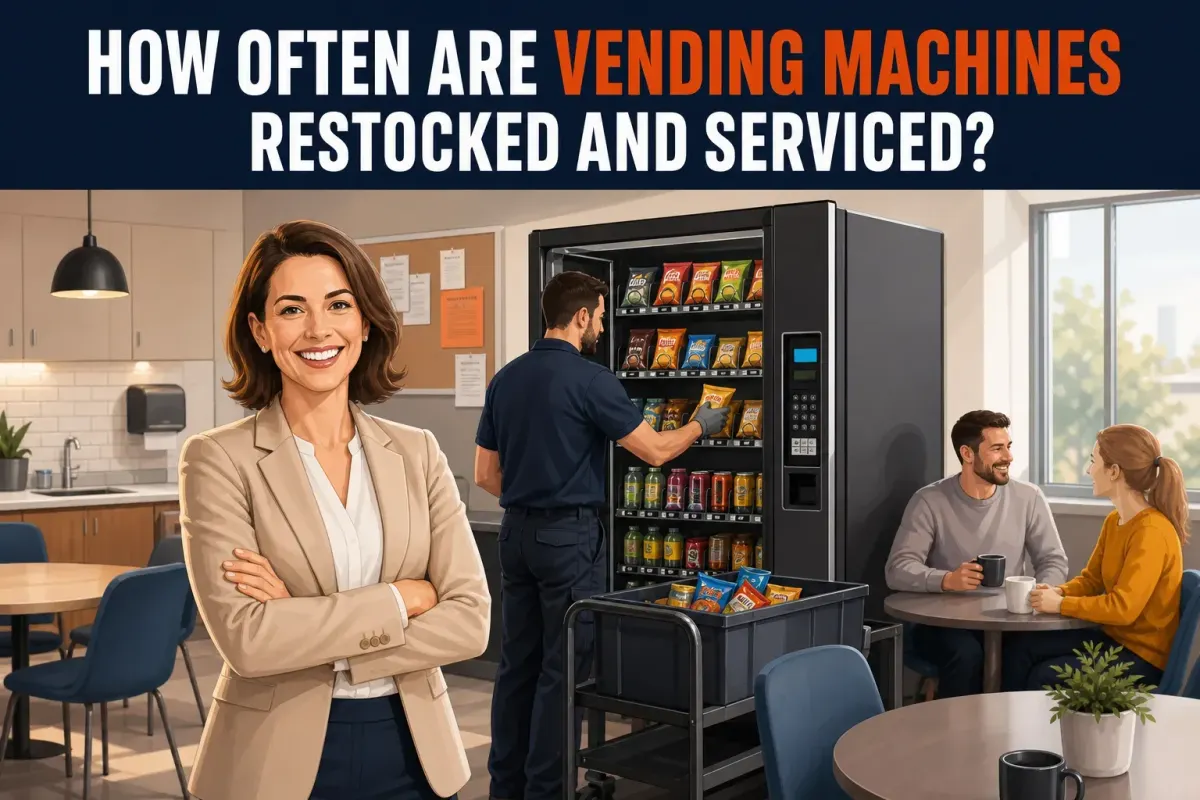
TL;DR: Vending machines are restocked and serviced based on usage, volume, and live machine reporting. Property managers do not need to monitor inventory, manage restocking, or chase service issues.
1) Restocking is based on usage, not just a calendar
For property managers, the simple answer is that vending machines are restocked based on how much they are being used.
A busy machine may need more frequent visits. A lower-volume machine may need less frequent restocking. The right schedule depends on the property, the number of people using the machine, and how quickly products are selling.
Modern vending service is not just someone guessing when the machine might be low.
Machines can provide up-to-date reporting, so the operator can see when products are running low or when the machine needs attention. That allows the service schedule to adjust based on real usage instead of relying only on a fixed calendar.
The goal is simple: the machine should stay stocked without the property manager having to notice low inventory first.
2) Property managers should not have to monitor the machine
A good vending service should be seamless.
The property manager should not need to check the machine every day, track which products are low, manage inventory, or remind the operator to come restock.
If a product is getting low, the operator should already have that information through machine reporting. If the machine needs service, that should also be visible quickly so the issue can be addressed.
For the property manager, the vending machine should function like an amenity, not another task.
That means:
- No inventory tracking
- No restocking coordination
- No product ordering
- No machine repair responsibility
- No payment system management
- No day-to-day vending operations
The benefit is having the machine available for tenants, employees, visitors, customers, or residents without adding administrative work to the property team.
3) Service frequency depends on volume
There is no single restocking schedule that fits every property.
A warehouse with heavy daily use may need more frequent service than a small office. An apartment building may have different usage patterns than a gym, dealership, hotel, or medical office.
The service frequency depends on:
- How many people are on site
- How often the machine is used
- What products are selling
- How quickly inventory moves
- Whether the machine serves employees, tenants, customers, or visitors
- The size and type of machine
- The property’s hours and access rules
Higher-volume machines may be visited more often. Lower-volume machines may need fewer visits.
The important part is that service should match actual usage.
A vending machine should not sit empty because the schedule is too slow, and it should not be visited unnecessarily if the machine is still well stocked. Usage data helps make that process more practical.
4) What a normal vending service visit includes
A normal service visit is not only about adding more snacks and drinks. Property managers who want a deeper breakdown can also review what is included in vending machine maintenance services.
A proper visit can include:
- Restocking products
- Cleaning the machine area
- Checking the payment system
- Reviewing cashless payment functionality
- Removing expired or slow-moving products
- Fixing small issues
- Checking machine performance
- Adjusting the product mix
- Reviewing what is selling and what is not
- Making sure the machine is presentable
Product mix matters.
If certain items are not selling, the operator should be able to rotate them out and test other products. If certain drinks or snacks are selling quickly, the operator can adjust the inventory to better match demand.
This is one reason live reporting is useful. It helps the operator understand what is happening inside the machine before the property manager needs to get involved.
5) What happens if a machine is low, empty, dirty, or not working?
Property managers should have a simple way to report an issue if they notice something before the operator does.
In most cases, the property manager will have a direct contact number available. There may also be a backup contact or service sticker on the machine.
If something needs attention, Vending Village is also available to assist.
Examples of issues that should be reported include:
- The machine is empty
- A product selection is not working
- The machine is dirty
- A payment issue occurs
- A product gets stuck
- The machine is making an unusual noise
- The machine needs to be moved
- The product mix is not matching what people want
The property manager should not have to troubleshoot the machine.
The role of the property team is simply to report the issue if they notice it. The vending operator handles the service work.
6) The goal is zero administrative effort
For property managers, the goal of vending service is straightforward: receive the benefit of the amenity without taking on the operation.
That means the machine is installed, stocked, maintained, cleaned, repaired, and adjusted by the vending provider.
The property should not need to manage:
- Restocking schedules
- Product inventory
- Machine maintenance
- Repairs
- Payment issues
- Product changes
- Service calls
The best vending service is one the property manager barely has to think about.
When the machine is stocked, clean, working, and matched to the people using it, it supports the building without creating extra work. That is the standard property managers should expect from a properly managed vending service.