What Types of Properties Are Best for Vending Machines?

TL;DR: The best properties for vending machines are not limited to one building type. A property is usually a good fit when enough people are on-site daily, those people stay for a meaningful amount of time, and management wants to offer a convenient amenity for staff, tenants, customers, or clients.
1) Many property types can work for vending machines
There is no single best property type for vending machines.
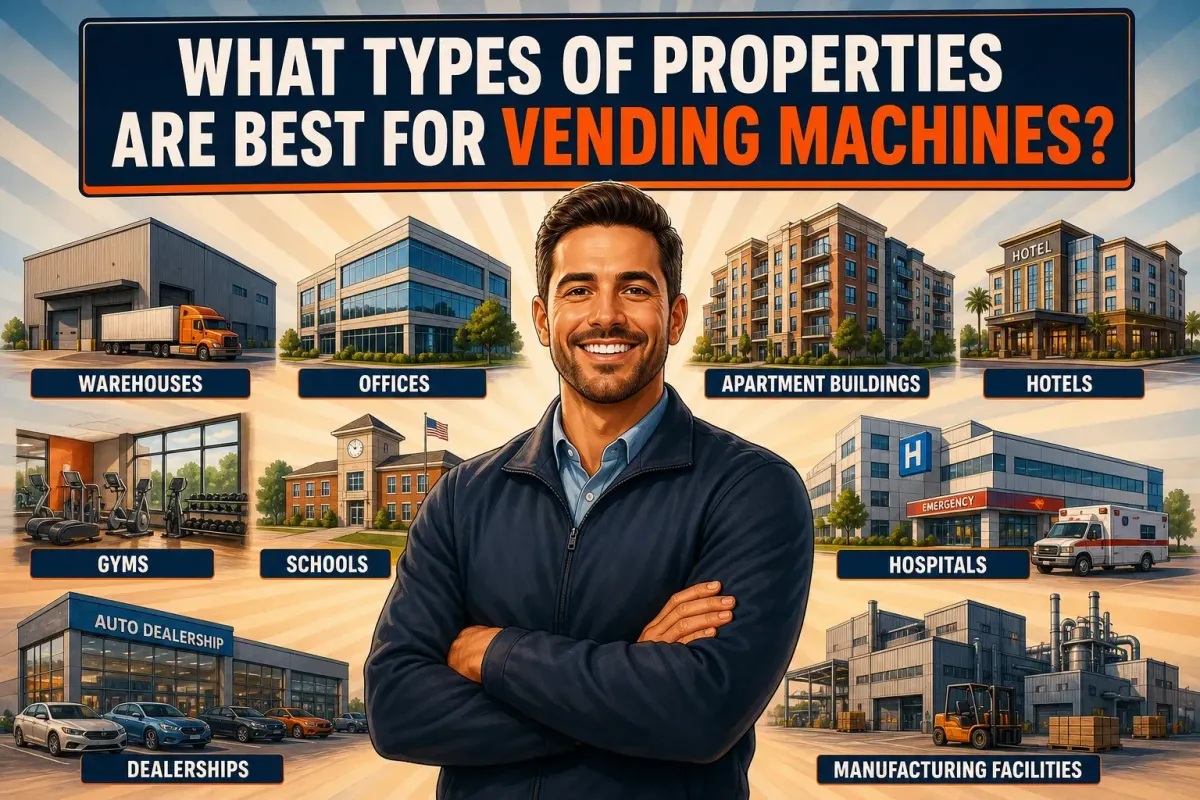
Warehouses, offices, apartment buildings, hotels, gyms, schools, hospitals, dealerships, manufacturing facilities, and other commercial properties can all work when the use case is strong.
The better question is not only “What type of property is this?”
The better question is “Do people here actually need convenient access to snacks and drinks?”
That is what usually determines whether vending makes sense.
Warehouses with long shifts and limited food options may be a strong fit. An office with employees on-site all day may also be a strong fit. An apartment building may work if residents want convenient access to drinks and snacks without leaving the property. A hotel may work if guests need something quick after hours.
Different buildings can work for different reasons.
2) The best vending machine properties have people who need the service
A good vending property usually has people who benefit from the machine being there.
That may include:
- Employees
- Tenants
- Visitors
- Customers
- Clients
- Guests
- Students
- Patients
- Contractors
- Drivers
- Shift workers
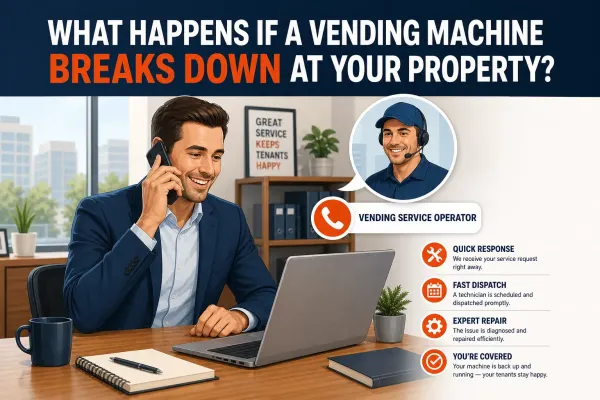
For property managers, a free vending machine service is not just about selling snacks. It is about offering a simple amenity that makes the building more convenient.
That can matter in places where people are working, waiting, visiting, studying, training, exercising, or spending long periods of time on-site.
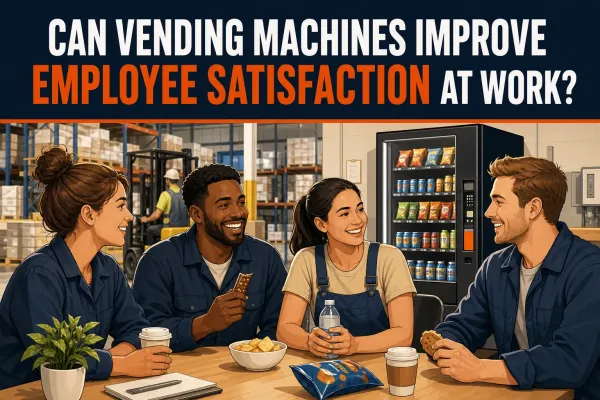
Managers may want vending machines because they want to offer something useful for their staff and clients. For workplace-focused properties, vending can also support employee satisfaction and workplace perks by giving people easier access to snacks and drinks during the day. In many buildings, there is no cafeteria, no nearby convenience store, or no easy way for people to grab a quick drink or snack without leaving the property.
That is where vending can make sense.
3) A practical minimum is usually around 30+ people per day
A property does not need thousands of people walking through every day to support a vending machine.
But it does need enough daily use.
As a practical starting point, around 30+ people on-site or passing through daily is often the minimum where vending starts to make more sense.
That does not guarantee the machine will perform. Product mix, placement, visibility, pricing, and the type of users still matter. But if there are not enough people using the property each day, the machine may not get enough activity to justify service.
The number of people on-site matters.
How long they stay also matters.
A building with 40 employees working long shifts can sometimes be a better fit than a building with more people who pass through quickly and never stop.
Good vending properties usually have one or more of these traits:
- People are on-site for several hours
- Employees work long shifts
- Visitors or clients spend time waiting
- Food and drink options nearby are limited
- Management wants to improve convenience
- The machine can be placed in a visible area
- The machine is easy to access and service
The stronger the daily use case, the better the fit.
4) Property type matters less than use case
Some property managers ask whether their building type is good or bad for vending.
The answer is usually: it depends on the use case.
A gym can be a good fit if members and staff want drinks, protein snacks, or quick grab-and-go items. A hotel can work if guests need after-hours convenience. A warehouse can work if employees have short breaks and limited access to food. An office can work if employees are in the building long enough to use it.
The property type gives clues, but it does not decide everything.
A vending machine may not make sense if:
- Too few people are on-site each day
- People do not stay long enough to use it
- The machine would be hidden or inconvenient
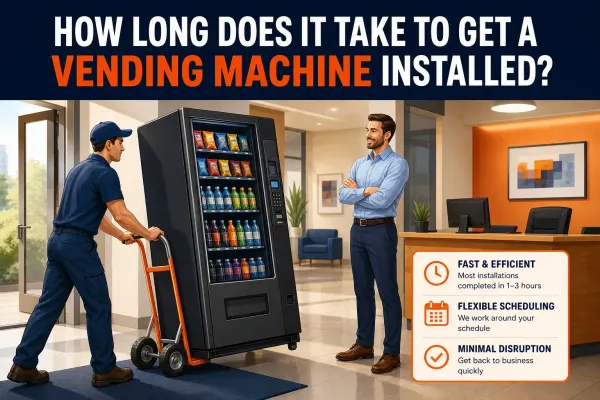
- There is no good place to install it
- The outlet or space does not work
- The property does not want the amenity
- There is no clear group of users who would benefit
That is why it is better to evaluate each property individually.
The best properties are the ones where the machine solves a real convenience problem for the people already there.
5) How property managers should think about vending fit
For property managers, the main takeaway is that many properties can be good vending machine locations.
The building does not need to be perfect. It just needs to have enough daily use and a reason for people to want convenient access to snacks and drinks.
Before deciding, property managers should ask:
- How many people are on-site or passing through daily?
- How long do they usually stay?
- Are employees, tenants, customers, or clients asking for better amenities?
- Are nearby food and drink options limited?
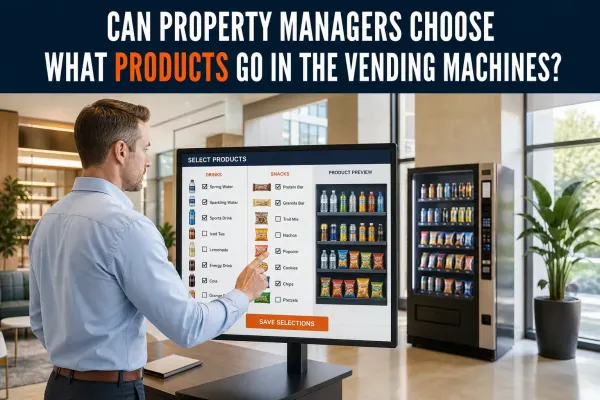
- Is there a visible place for the machine?
- Is there an electrical outlet near the preferred location?
- Would this make the property more convenient for the people using it?
A good vending setup starts with understanding the people in the building.
If there are around 30+ people using the property daily, and those people spend enough time there to benefit from snacks and drinks on-site, vending may be worth considering.
The best properties for vending machines are not just high-traffic buildings. They are buildings where people actually need the convenience.