Does the vending machine take cards and tap, or just cash?

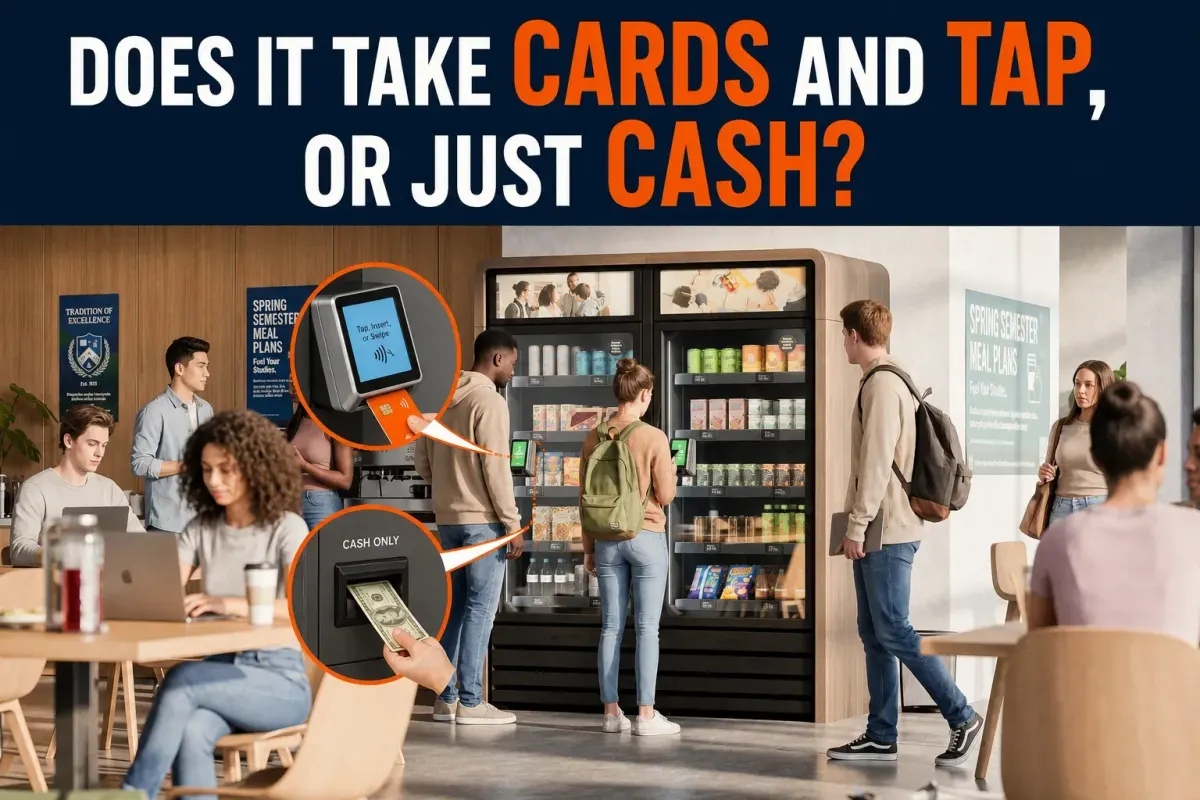
TL;DR: Most modern vending machine service options support card and tap payments, and many newer smart coolers are tap-only. If cash is important for your location, Vending Village can help recommend a setup that includes cash acceptance or pair a tap-only smart cooler with a cash-capable machine.
Does a vending machine take cards and tap, or just cash?
One of the first questions property managers, office managers, and facility teams ask is simple: does the machine take cards and tap, or just cash?
The answer depends on the type of machine being installed.
In most modern vending setups, card and tap payments are common. For many locations, especially offices, apartments, gyms, warehouses, and customer-facing properties, tap payment is the main expectation now. Staff and customers are used to paying with phones, cards, and contactless payment.
The newest smart coolers often work differently than older vending machines. Many smart coolers are tap-only. The customer taps or scans to authorize payment, opens the cooler, takes the product, and the system charges them digitally.
That setup is convenient, but it also means cash is not always built into every machine.
If cash is a requirement for your property, that should be mentioned early. Vending Village can then recommend a machine setup that supports both tap and cash, instead of matching the location with a tap-only option.
Payment issues should not become the property manager’s responsibility. If a card reader, tap payment, or cash mechanism needs attention, the vending provider should handle the service work. We explain the broader responsibility breakdown in our guide on who stocks and maintains vending machines at a commercial property.
Why most locations care about tap payment
In our experience, when a location asks about payment options, the main concern is usually convenience.
Property managers and facility teams are not usually asking because they want to manage cash. They are asking because they want to know whether staff, residents, customers, or visitors will actually use the machine.
Tap payment usually helps because:
- People do not need to carry coins or bills
- Staff can buy something quickly during a short break
- Customers are less likely to walk away because they do not have cash
- The machine can fit how people already pay for most purchases
- The operator can often track sales and product demand more clearly
This is especially important in workplaces and residential buildings where the same people use the machine repeatedly. The easier the machine is to use, the more likely it is to become part of their routine.
That does not mean cash is never needed. It means tap and card payment should usually be treated as the standard starting point.
When cash still matters
Even though everything is moving digital, cash can still matter in certain locations.
Some properties may have users who prefer cash. Some may have older residents, visitors, contractors, shift workers, or customer groups who are more likely to use bills and coins. In those cases, a tap-only machine may not be the best fit by itself.
The important thing is to tell us upfront.
If a property says cash is important, the vending setup can be adjusted. That may mean recommending a traditional snack or drink machine that accepts both cash and card. It may also mean adding a second machine that takes cash if demand is there.
The mistake is assuming every machine works the same way.
A smart cooler may be a good fit for fresh food, drinks, healthier snacks, or a modern office setup, but it may not accept cash. A traditional snack or drink machine may be better when the location wants both tap and cash payment in one setup.
Example: pairing a smart cooler with a cash machine
One practical setup we have seen is pairing a smart cooler with a machine that takes cash.
This can work well when the location wants the benefits of a newer smart cooler but still has some users who may pay with cash.
For example:
- The smart cooler handles tap-only purchases
- The second machine accepts cash and card
- The location gets a modern vending option without excluding cash users
- The operator can see which payment setup gets used more over time
This is a better approach than forcing one machine to solve every need.
For property managers, the question should not just be, “Does it take cash?” The better question is, “What payment setup makes sense for the people using this machine every day?”
That answer can change depending on the building, the users, and the type of products being offered.
What property managers should ask before choosing a vending setup
Before requesting vending machine service, it helps to confirm a few details about payment expectations.
Ask yourself:
- Do most staff, residents, or customers already use tap/card for small purchases?
- Is cash important for this specific audience?
- Would a tap-only smart cooler be acceptable?
- Would a second cash-capable machine be useful if demand is there?
- Are there any users who may be excluded if the machine does not take cash?
For most locations, tap and card payment will be enough. In many newer setups, especially smart coolers, tap-only is normal.
But if cash matters, say that early. It allows Vending Village to recommend the right machine type and match the property with an operator who can service the location properly.
For vending, the ongoing service process should be clear before the machine is installed. The operator should handle restocking, product changes, and basic service based on how the location is actually using the machine. A busy workplace may need more frequent visits, while a smaller building may need a lighter schedule. For more detail, read How Often Will Someone Come to Restock the Vending Machine?