Who Stocks and Maintains Vending Machines?

TL;DR: At a property, the vending provider should handle stocking, maintenance, repairs, product rotation, payment issues, and service visits. Property staff should not be responsible for managing the vending machine.
1) The vending provider handles the machine
For property managers, the simple answer is that Vending Village handles stocking and maintenance through its local operator network.
It is not a mix between the property staff and the vending provider.
Property staff should not be stocking products, fixing machines, managing payments, removing expired items, or handling day-to-day vending operations.
That is the vending provider’s responsibility.
At a commercial property, the property manager’s role is usually limited to:
- Providing a practical place for the machine
- Giving reasonable access for service
- Sharing any property rules the operator needs to know
- Reporting an issue if they notice one
The vending operator handles the rest.
That is the point of having a managed vending service. The property gets the amenity without taking on the operation.
2) What stocking and maintenance includes
Stocking and maintaining a vending machine is more than putting snacks and drinks inside it.
A properly managed vending service can include:
- Product restocking
- Cleaning the machine and surrounding area
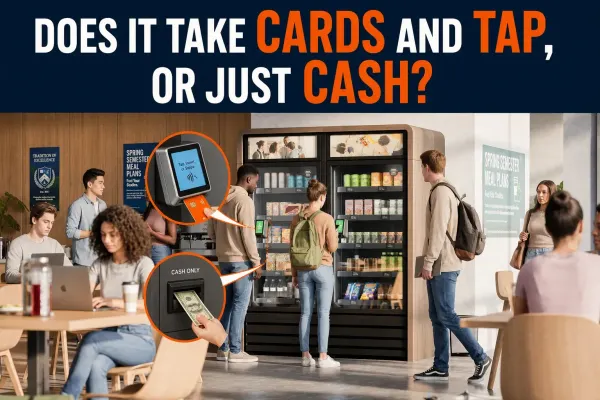
- Checking payment systems
- Handling payment issues
- Removing expired products
- Rotating products that are not selling
- Adjusting the product mix
- Repairing machine issues
- Responding to service calls
- Replacing the machine if needed
The property team should not need to track which products are low, order inventory, handle refunds, repair a card reader, or troubleshoot a jammed product.
Those are vending operations.
For property managers, the better expectation is simple: the machine should be stocked, clean, working, and supported by the operator.
3) Service is based on usage
After installation, the local operator is responsible for keeping the machine serviced.
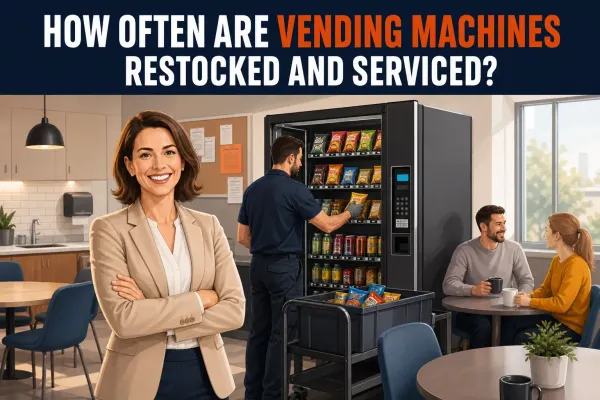
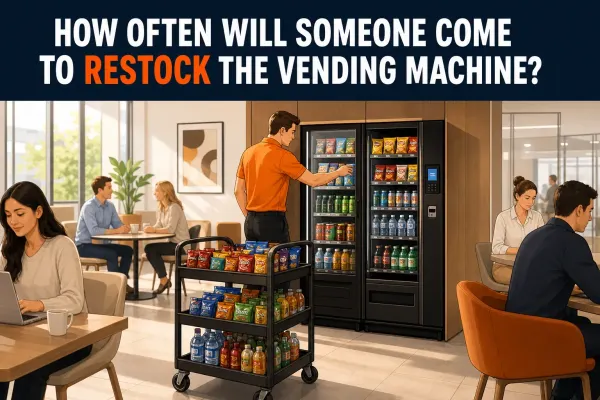
That includes regular visits, usage-based restocking, quick issue response, product adjustments, and communication with the property contact when needed. Property managers who want more detail can also review how often someone comes to restock the vending machine.
A busier property may need more frequent restocking. A lower-volume property may need fewer visits. The schedule should be based on actual usage and what the machine needs.
The operator should be watching the account and adjusting service accordingly.
For example:
- If certain drinks sell quickly, the operator can stock more of them.
- If certain snacks do not move, the operator can rotate them out.
- If the machine is used heavily during certain shifts or hours, service can be adjusted.
- If an issue comes up, the operator can respond without the property manager needing to manage the repair.
The goal is for the vending machine to operate in the background as a useful amenity.
4) What to do if something goes wrong
If something goes wrong with the vending machine, the property manager should not have to troubleshoot it.
The first step is usually to use the service sticker on the machine.
That sticker should provide the contact information needed to report an issue directly. If additional support is needed or the issue is not being resolved, the property manager can contact Vending Village.
Common issues to report include:
- The machine is empty
- A product is stuck
- The card reader is not working
- The machine is dirty
- A product is expired
- The machine is making an unusual noise
- A selection is not dispensing
- The machine needs to be moved
- The product mix is not working for the property
The property manager’s job is only to report the issue if they notice it.
The vending provider handles the service work.
5) The property gets the amenity without the operation
The main reassurance for property managers is that the machine is fully managed for them.
There should be no property staff involvement in stocking, maintenance, repairs, payments, product changes, or vending operations.
The property gets the benefit of the amenity without adding work to the team.
That matters because vending should make a commercial property more convenient, not more complicated.
When the machine is stocked, clean, working, and maintained properly, it can support employees, tenants, customers, visitors, or residents without creating another task for management.
For commercial properties, that is the standard to expect: a vending machine service that is installed, stocked, maintained, and supported by the provider, with the property team only involved when access or communication is needed.