What Property Managers Need to Know Before Adding a Vending Machine

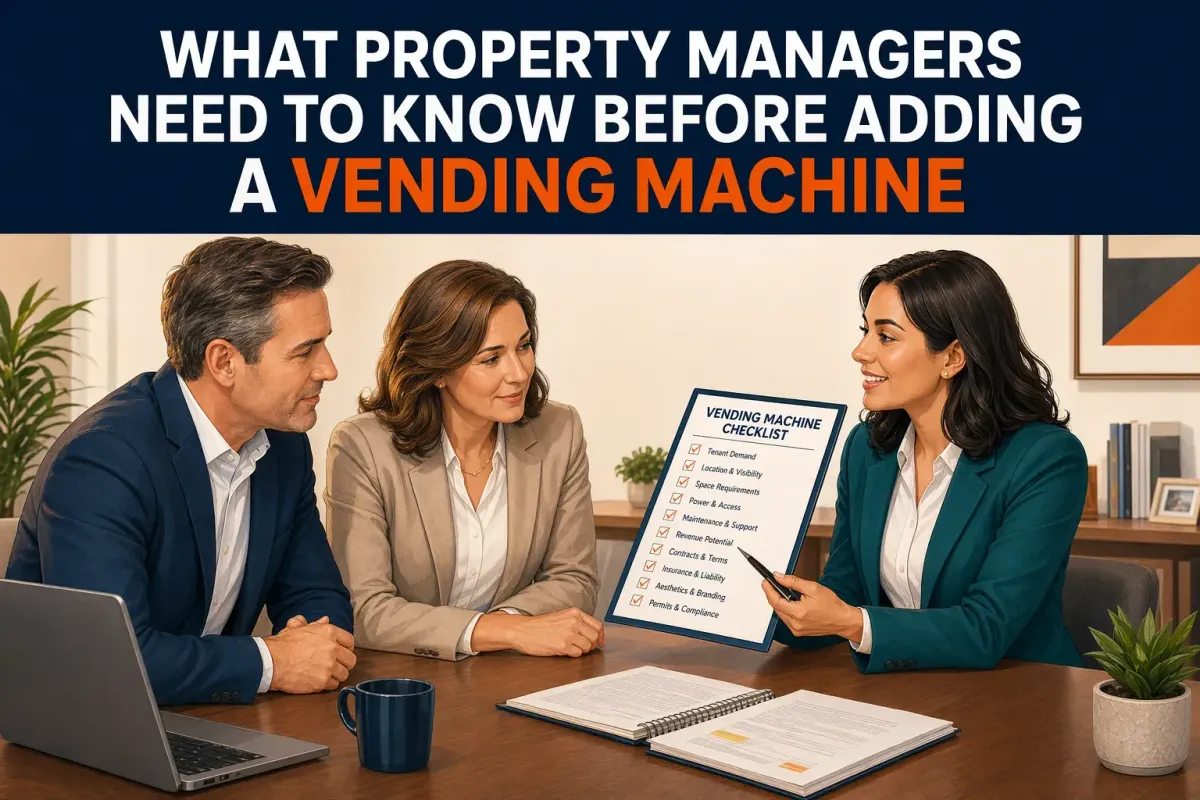
TL;DR:
Before adding a vending machine to a commercial property, property managers should think through space, electrical access, placement, and whether the building is a strong fit. The good news is that the process is usually simpler than expected, and the right operator can handle the machine, service, and ongoing maintenance.
Submit your property details here: https://vendingvillage.com/free-vending-machine
1) Start with whether your building is a good fit
Before adding vending to a building, the first question is not what kind of machine you want. It is whether the property is actually a strong fit for vending service.
Properties with regular daily foot traffic tend to be the best candidates. Office buildings, warehouses, apartment communities, medical buildings, and other commercial properties can all be a fit depending on who is onsite and how often they use the space. If you are still early in the process, it may help to first read our guide on how to get a free vending machine for your building.
The main goal is to determine whether vending would be a useful convenience for the people at the property. If the answer is yes, the next step is making sure the building can support the setup.
2) Space and placement matter more than most people think
One of the biggest things property managers should consider is where the machine would actually go.
The best vending placements are visible, easy to access, and located where people naturally pass by. Break rooms, common areas, lobbies, waiting areas, amenity spaces, and employee gathering points are often stronger than out-of-the-way corners with little traffic.
This is one reason adding vending to a building should be looked at as both an operations decision and a convenience decision. A well-placed machine is more likely to be used, and that helps create a better experience for tenants, staff, residents, or visitors. It also ties into the broader value discussion we covered in our post on how vending machines generate revenue for property managers.
3) Electrical needs are usually simple, but still important
Property managers should also think about basic electrical access.
Most vending machines need a standard nearby power source, and the placement area needs to support that. In many properties, this is straightforward. Still, it is something worth confirming early so that the proposed location makes sense before moving too far into the process.
The good news is that property managers are usually not expected to become experts in vending machine requirements. The operator can typically help confirm whether a location works and what is needed for installation. Your role is mainly to provide the building context and help identify a practical placement area.
4) Tenant and visitor benefits should be part of the decision
A vending machine is not just about filling empty wall space. It should provide a clear benefit to the people using the property.
In office buildings, that may mean giving employees faster access to drinks and snacks during the workday. In warehouses, it may mean offering convenient options during long shifts. In apartment communities, it may add a useful amenity for residents. In medical settings, it can improve convenience for staff and visitors.
That is part of why we are excited to be expanding this service into more markets. For example, in our post on free vending machine service in Houston for property managers, we highlighted how offices, warehouses, apartments, and medical properties in Houston can all benefit from vending service when the setup matches the building.
5) Property managers often ask about liability and responsibility
Another common concern is who is responsible once a machine is onsite.
In most cases, the operator handles the machine, the product, and the ongoing service. That means the property manager is generally not the one stocking inventory, repairing the machine, or managing day-to-day operations. This is one reason vending can be an appealing option for commercial properties.
That said, property managers should still think through practical considerations like where the machine is placed, whether the area is appropriate, and how the addition fits within the building’s operations. The right operator relationship should make the process easier, not more complicated.
6) The best next step is to submit the property for review
If you are thinking about adding vending to a commercial property, you do not need to figure out every detail on your own before getting started.
The simplest next step is to submit your property details so the opportunity can be reviewed. From there, Vending Village can help connect you with a vetted operator and determine whether the building is a good fit for vending service.
Submit your property details here: https://vendingvillage.com/free-vending-machine