Coffee Service vs. Vending Machine: What Makes Sense for Your Building?

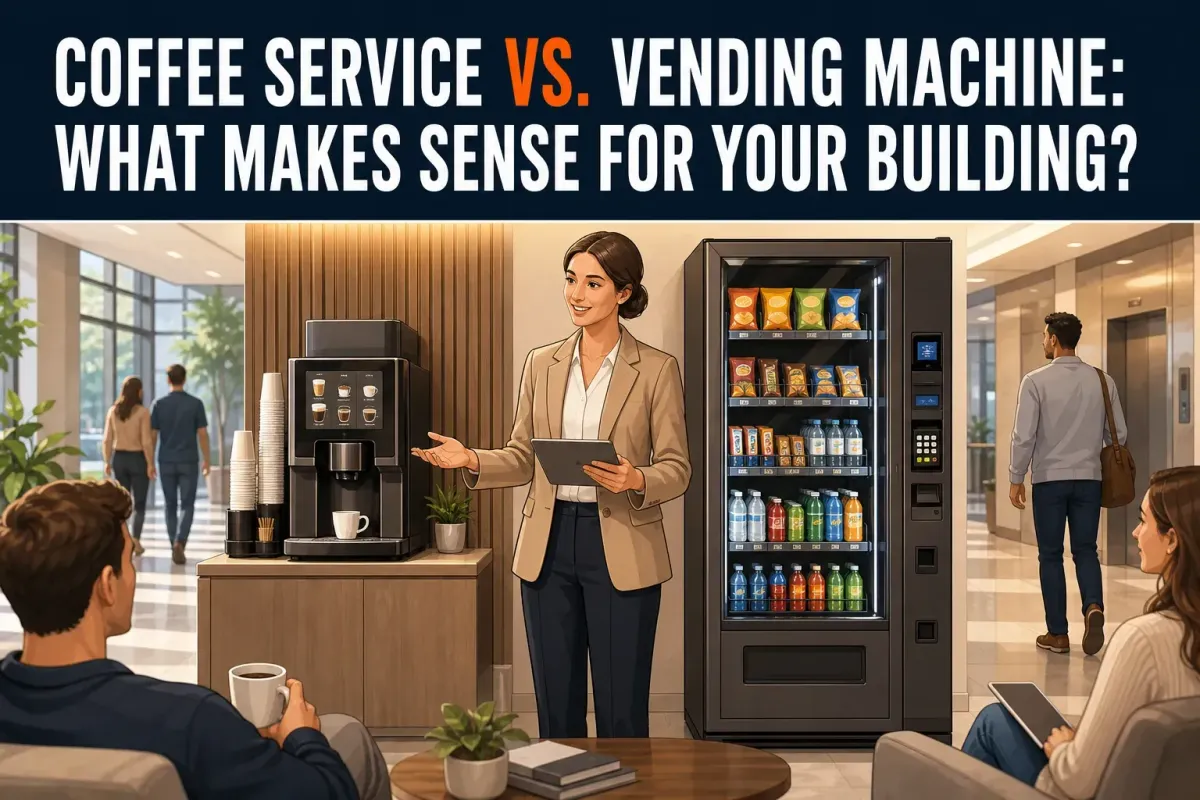
TL;DR: For many offices and workplace properties, coffee service vs. vending machine is not always an either/or decision. Coffee service covers the daily coffee routine, while vending machines cover snacks, drinks, and quick convenience throughout the day.
Coffee service vs. vending machine: what makes sense for your building?
For property managers, facility managers, operations managers, and office managers, the better question is usually not “coffee service or vending machine?”
In many workplace buildings, the better answer is both.
Coffee service solves one problem. Vending solves another.
Coffee is part of the daily routine for a lot of employees. Staff want coffee in the morning, between meetings, during breaks, and sometimes later in the day. Vending covers the other part of the workday: snacks, cold drinks, energy drinks, healthier options, and quick grab-and-go items. If you are thinking about vending as a workplace perk, it also helps to understand how vending machines improve employee satisfaction at work.
From what we see at Vending Village, coffee service can be a strong add-on because it is easy for staff to use, easy for operators to maintain, and usually cost-effective for the office compared to sending employees out for coffee.
The building does not need to manage the coffee program themselves. The operator can supply the coffee, cups, lids, stirrers, cream, sugar, and other supplies, then bill the office at the end of the month.
The service model matters after installation too. With vending, the operator should be responsible for stocking, service, repairs, and payment issue handling. If those basics are not being handled well, the building may need to replace the operator carefully instead of removing the machine without a plan. For the transition steps, read How Do I Switch Vending Operators Without Disrupting My Building?.
How coffee service works
Coffee service is usually a workplace amenity paid for by the office, employer, or building.
The basic idea is simple.
Staff can make coffee on-site and have the supplies they need available in the breakroom, kitchen, or staff area. The operator handles the supplies, restocking, and service schedule.
A basic coffee service may include:
- Coffee
- Cups
- Lids
- Stirrers
- Cream
- Sugar
- Sweeteners
- Filters
- Napkins
- Related breakroom supplies
- Restocking and service visits
The exact setup depends on the property, employee count, and how much coffee is being used.
One reason coffee service works well is that usage is usually easier to estimate than many people expect. If an office has a consistent number of employees, the operator can monitor how much coffee is being used, restock accordingly, and adjust the monthly supply.
The operator can buy coffee and supplies at wholesale, then earn margin through the service and monthly billing.
For the office, the benefit is convenience. Staff get coffee on-site, and the office does not need to assign someone internally to manage coffee runs, supplies, inventory, or restocking.
Another factor to consider is who manages the service after installation. With a properly managed vending machine service, property staff should not be stocking products, fixing machines, handling payment issues, or managing inventory. The provider should handle those responsibilities. For a full breakdown, read who stocks and maintains vending machines at a commercial property.
How vending machines work
A vending machine is usually different from coffee service because the property typically does not pay for the products upfront. If you manage a building in Pennsylvania, Vending Village also offers free vending machine service in Pennsylvania through vetted local operators who can install, stock, and service the machine.
In most standard vending placements, the operator installs the machine, stocks it, services it, handles payment processing, repairs it, and earns money when people buy from the machine.
The property provides the space, access, and basic communication.
A vending setup may include:
- Snacks
- Cold drinks
- Energy drinks
- Healthy snacks
- Water
- Meal replacement items
- Basic grab-and-go products
- Product changes based on demand
- Restocking
- Maintenance
- Payment support
For many properties, vending is useful because it gives employees, tenants, visitors, or residents access to quick items without leaving the building.
That is especially helpful when food options nearby are limited, breaks are short, or the building has shift workers who need options outside normal business hours.
The main difference is who pays
The biggest difference between coffee service and vending is the payment model.
With vending, employees or users usually pay at the machine. That is why vending can often be offered at no cost to the property through a free vending service, where a vetted local operator installs, stocks, and services the machine.
With coffee service, the office or building usually pays for the coffee and supplies. The operator tracks usage, restocks the supplies, and bills the office at the end of the month.
That does not make coffee service a bad deal. It just means it should be understood clearly.
Coffee is something many workplaces already provide or consider providing. The difference is that with an operator-managed coffee service, the office does not need to handle the admin work, supply runs, or inventory.
In my opinion, coffee service is one of the easier workplace amenities to justify because people already buy and drink coffee every day. When the cost is close to what they would pay elsewhere, and the operator handles the work, it becomes a practical service for many offices.
When coffee service makes sense
Coffee service usually makes sense when the building has regular daily staff or tenants who use a shared kitchen, breakroom, or office area.
It can be a good fit for:
- Offices
- Corporate workplaces
- Medical offices
- Professional service firms
- Warehouses with staff breakrooms
- Shared office buildings
- Multi-tenant commercial properties
- Operations teams with early shifts
- Buildings where employees currently leave for coffee
Coffee service works best when there is predictable daily use.
If employees already make coffee, leave for coffee, or expect coffee to be available, then a managed coffee service can remove friction.
The key is having a clear location for the coffee setup and a simple plan for restocking.
When a vending machine makes sense
A vending machine usually makes sense when the property needs quick access to snacks, drinks, or other products throughout the day.
It can be a good fit for:
- Offices
- Warehouses
- Apartment buildings
- Gyms
- Schools
- Medical buildings
- Staff break areas
- Lobbies
- Tenant common areas
- Buildings with limited nearby food options
Vending is especially useful when people need options outside normal food service hours.
Coffee may solve the morning routine, but vending supports the rest of the day.
Employees may want a drink in the afternoon, a snack between meetings, or something quick during a short break. Shift workers may need options when nearby stores are closed.
That is where vending can help.
Why offering both can make the most sense
For many workplace properties, coffee and vending work together.
Coffee covers the daily beverage routine. Vending covers snacks, cold drinks, healthier options, and quick convenience.
Together, they can support more of the workday.
A combined setup may give staff access to:
- Coffee in the morning
- Drinks throughout the day
- Snacks during breaks
- Healthier options when available
- Energy drinks for long shifts
- Quick items after hours
- Seasonal products
- More variety over time
This is why we usually see both as complementary services.
Coffee does not replace vending. Vending does not replace coffee.
They solve different problems.
If the building has enough people and the right setup, offering both can create a better experience without requiring the property manager to run the service internally.
What to confirm before choosing coffee, vending, or both
Before moving forward, property managers and office managers should confirm a few practical details.
Employee or tenant count
The operator needs to understand how many people may use the service.
This helps determine whether the building can support coffee service, vending, or both.
Breakroom or kitchen setup
Coffee service usually needs a practical place for the coffee, supplies, cups, and related items.
A breakroom, kitchen, or shared staff area is usually best.
Storage space
Coffee service may require space for backup supplies.
That does not need to be complicated, but there should be a plan for where coffee, cups, cream, sugar, and other items will be stored.
Power and water needs
Some coffee setups may need power, water access, or a specific counter setup.
The operator should confirm what is required before installation or service begins.
Vending placement
A vending machine needs a visible, convenient location with power and enough clearance.
It should be placed where people already go, not somewhere hidden or inconvenient.
Service schedule
The operator should explain how often they will restock, check supplies, and respond to service needs.
For coffee, this may depend on usage. For vending, this may depend on product levels, machine alerts, and sales volume.
Monthly billing
Coffee service should have clear billing expectations.
The office or building should know what is included, how usage is tracked, and when they will be billed.
Final answer: coffee and vending usually solve different problems
Coffee service vs. vending machine is not always a choice between one or the other.
Coffee service is usually best for the daily coffee routine. It gives staff an easy way to make coffee on-site, with supplies handled by the operator and monthly billing to the office or building.
Vending machines are usually best for snacks, drinks, and quick convenience throughout the day. In many standard placements, vending is no cost to the property because users pay at the machine.
For many workplaces, the best setup is both: coffee for the routine, vending for the rest of the day, and an operator handling the service so the property manager does not have to manage inventory, supplies, repairs, or restocking.